

 Other services
Vaccination
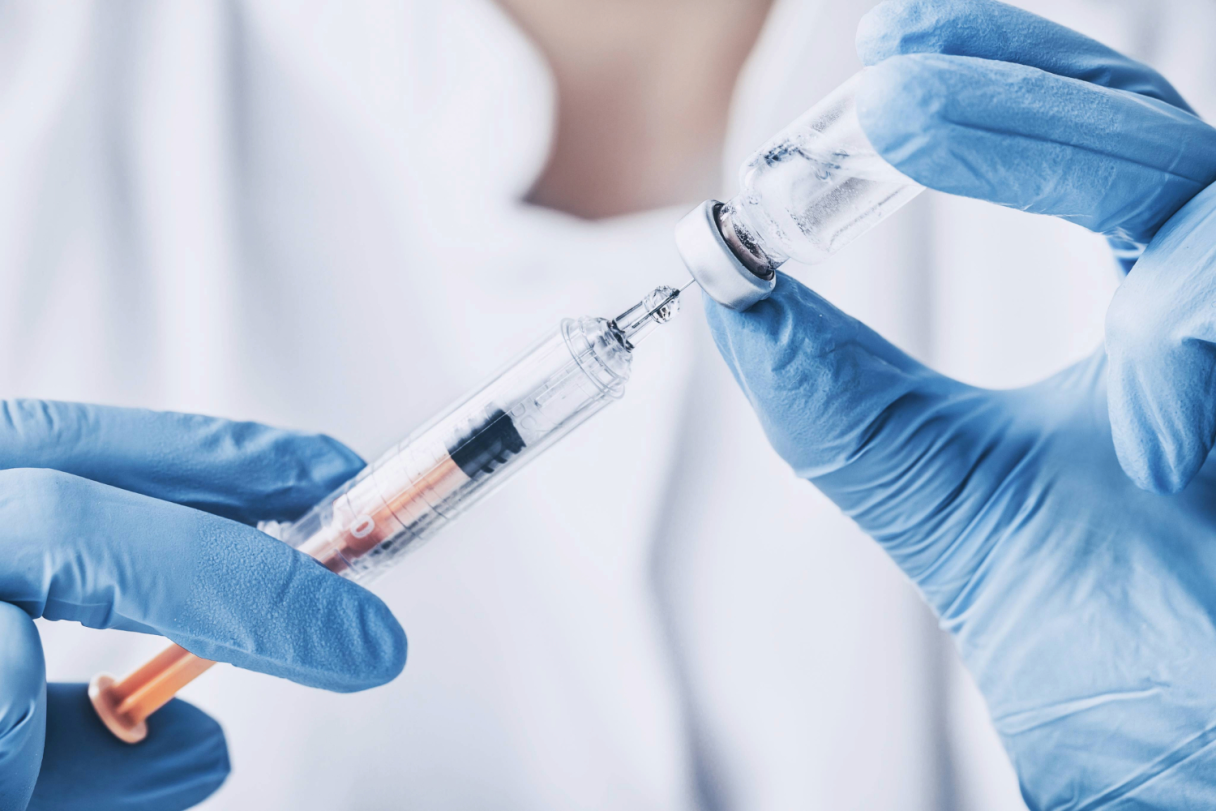
A vaccine is a preventive medicine: it contains a weakened or inactivated pathogen, or only a specific fragment of it, and the immune system learns to recognise and neutralise it without the person having to go through the disease itself. Once the course is completed, the body retains immunological memory, which allows a much faster response upon real exposure and prevents a severe course of illness. "Anti-Aging Institute", in cooperation with the "Veselības centrs 4" Vaccination Service, provides a full range of vaccination services for children and adults, including seasonal, recommended and travel vaccines. Unlike post-exposure solutions, vaccination works in advance: protection develops within weeks of the dose being administered, so the course should be started before the season or trip, not at the moment of risk. Every vaccination is recorded in the electronic vaccination database, so information about the doses received and the next revaccination date is available later quickly and without any uncertainty.
Price from €3
Book your appointment- Vaccines
- Seasonal, recommended and travel vaccines in one place
- Availability
- For children and adults, by prior appointment
- Records
- Vaccination data is recorded in the electronic vaccination database
The process in four steps
How does vaccination work?
-
01
Booking and consultation
You book a specific time, as vaccination is available by prior appointment only. A free consultation on vaccines is available in person at the vaccination room, where a specialist assesses your current state of health, previously received doses and planned travel.
-
02
Choosing the vaccine and schedule
Together with the specialist, a suitable vaccine and vaccination schedule are chosen. For example, two schedules are available for tick-borne encephalitis: the accelerated schedule, recommended in spring and summer (the first two doses two weeks apart), and the standard schedule (the first two doses one to three months apart).
-
03
Vaccination and observation
The vaccine is administered by a nurse or doctor. Please bring your passport or ID card and, if you have one, your health insurance policy. After the dose is administered, you remain under observation for a short while to make sure you feel well.
-
04
Documentation and revaccination
Information about the vaccination is entered into the electronic database, so you can check the doses received and the next due date at any time. Subsequent doses of the course and booster vaccinations are scheduled according to the chosen schedule.
 Personalised approach
Supervised vaccination plan
Every vaccination course is designed and monitored by our specialist and tailored specifically to your goals and body.
Book the service
We will contact you within 2 working days.
Frequently asked questions about vaccination
How many vaccine doses are needed?
It depends on the specific vaccine. For some vaccines, one dose per season is sufficient, for example the flu vaccine. Others require a course of several doses: the tick-borne encephalitis vaccine involves three doses, where the first two provide protection for one year, and the third, which must be received 5–12 months after the second, extends it to three years. After that, the first booster should be given after three years, and subsequent ones every 10 years. The specialist will determine the exact schedule during the consultation.
How does a patient feel after vaccination?
For a short time after the dose is administered, the injection site may be tender, and a temporary rise in body temperature is possible, which usually passes within a couple of days. Such reactions indicate that the immune system has started to work. After vaccination, you remain under observation in the room for a short while, and if you have any questions about how you feel afterwards, you can contact the vaccination room.
When does protection develop after vaccination?
Protection does not develop immediately: the immune system needs weeks to produce a sufficient amount of antibodies and immunological memory. This is why vaccination should be planned in advance: before the start of the season or at least a few weeks before departing for a region where a travel vaccine is required. If the course is started during the season, the accelerated schedule is used, allowing protection to be achieved sooner.
Adults are advised to check their vaccination status regularly. For example, adults should receive a booster against diphtheria and tetanus once every ten years. Read more about recommended vaccinations on the SPKC website.
Team
Specialists who perform this service




Vaccination prices
Full price listVaccination
Related services
Complete your result
Further services for a better result.


