

 Genetic tests
Common Hereditary Cancer Panel
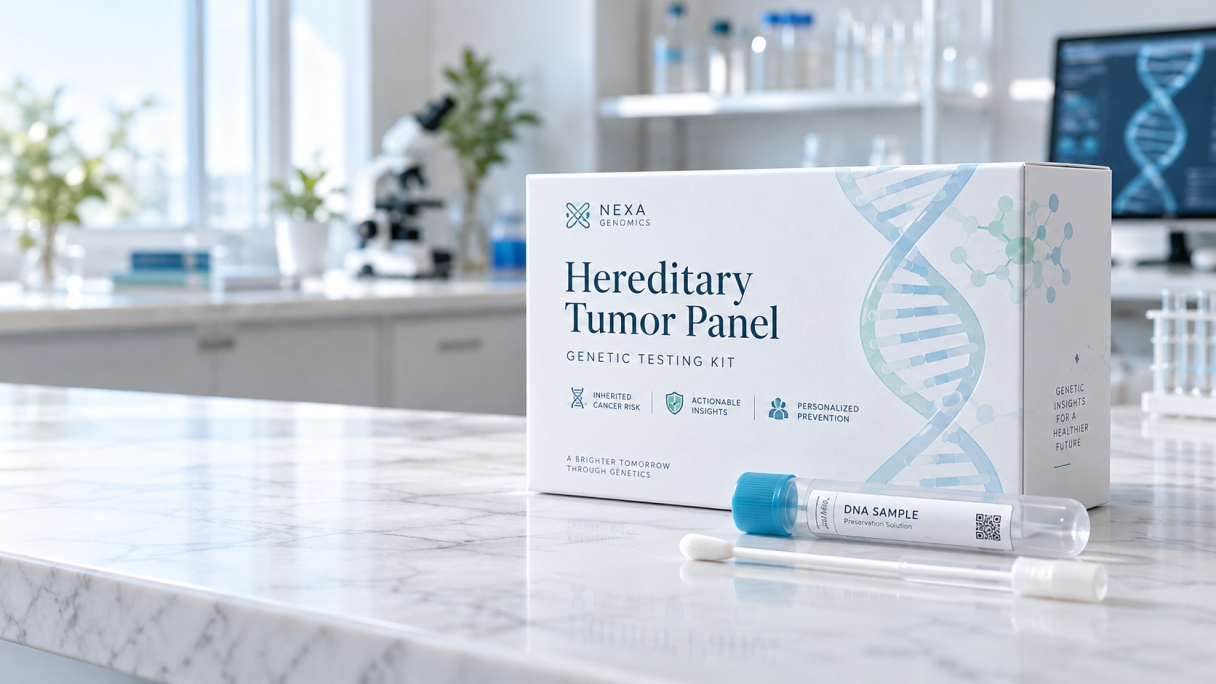
The Common Hereditary Cancer Panel is a genetic test that analyses 33 genes using next-generation sequencing (NGS). The test helps identify inherited genetic changes associated with an increased risk of developing various malignant tumours. It is particularly relevant when hereditary breast and ovarian cancer, Lynch syndrome, Li–Fraumeni syndrome, Cowden syndrome or other hereditary cancer syndromes are suspected. The results provide information for assessing your individual genetic risk and planning further healthcare.
Price from €715
Book your appointment- Analyses
- 33 genes associated with hereditary cancer risk
- Assesses
- Genetic predisposition to developing various malignant tumours
- Additional insight
- Risk of hereditary cancer syndromes and options for individual prevention
 Personalised approach
Supervised Common Hereditary Cancer Panel plan
Each Common Hereditary Cancer Panel plan is drawn up and supervised by our specialist and tailored to your specific goals and body.
Book this service
We will contact you within 2 working days.
Frequently asked questions about the Common Hereditary Cancer Panel
What is the Common Hereditary Cancer Panel?
It is a genetic test that analyses 33 genes using the NGS method to identify changes that may be associated with an increased risk of hereditary malignant tumours.
Who should take this test?
The test may be recommended for people with a family history of malignant tumours, cancer diagnosed at a young age, or clinical signs suggesting a hereditary cancer syndrome.
What is the NGS method?
NGS, or next-generation sequencing, is a genetic analysis technology that makes it possible to analyse multiple genes simultaneously and identify certain types of changes in their DNA sequence.
What does a positive test result mean?
Identifying a clinically significant pathogenic gene variant may indicate an increased risk of developing certain tumours. This does not mean that a malignant tumour will definitely develop.
Does a negative test result rule out the risk of developing cancer?
No. A negative result does not completely rule out either an inherited predisposition or the possibility of developing a malignant tumour, as risk can also be influenced by other genetic, environmental and lifestyle factors.
Common Hereditary Cancer Panel prices
Full price listGenetic and functional tests
Related services
Complete your result
Further services for a better result.


