

 Facial Aesthetics
Facial Skin Care with Acids
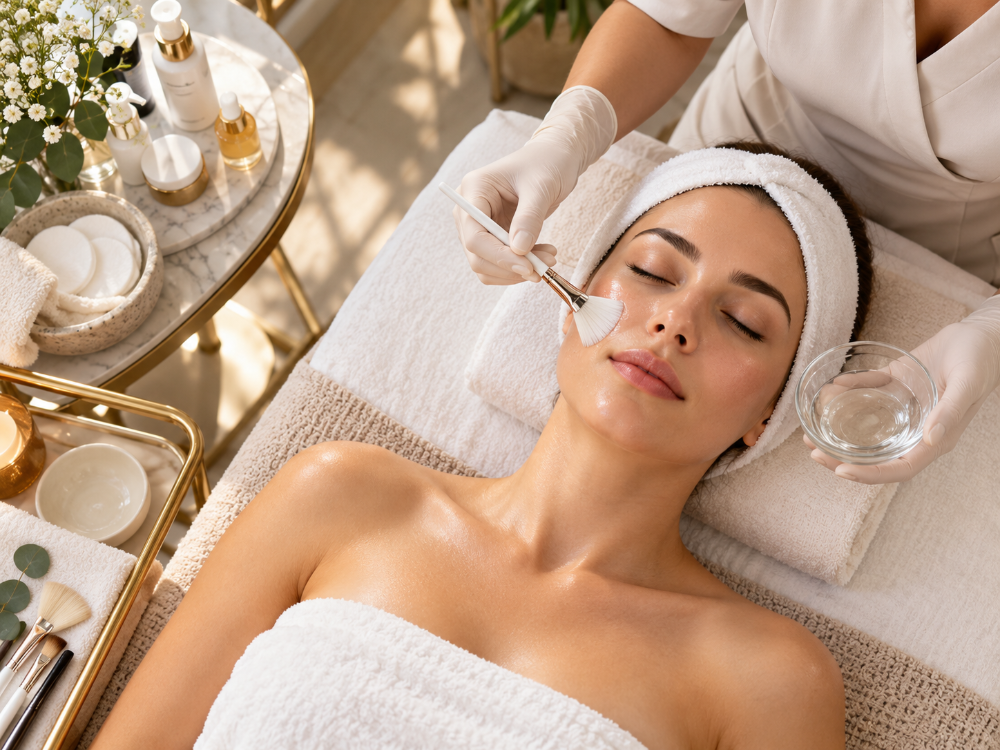
Facial skin care with acids, also known as a chemical peel, is a professional skin renewal procedure that uses specially selected acids to gently remove dead skin cells, improve skin texture and support the skin’s natural renewal. The procedure helps reduce surface irregularities and the visibility of clogged pores and pigmentation spots, giving the face a fresher, more even appearance. The procedure is tailored to your skin type, sensitivity and individual needs. Depending on the condition of your skin, the specialist may choose different types of acids and concentrations to improve skin quality and address specific aesthetic concerns.
Price from €70
Book your appointment- Smoother, more even facial skin
- Acids help remove dead skin cells, improving skin texture and reducing roughness.
- Clearer pores and fewer skin imperfections
- The right acids help reduce clogged pores, blackheads and imperfections associated with oily skin.
- A fresher, more radiant complexion
- The procedure promotes renewal of the skin’s surface layer, helping to improve skin tone and reduce uneven pigmentation.
 Personalised approach
Supervised facial skin care with acids plan
Every facial skin care with acids plan is designed and supervised by our specialist and tailored precisely to your goals and individual needs.
Book this service
We will contact you within 2 working days.
Frequently asked questions about acid facials
What is facial skin care with acids?
Facial skin care with acids, also known as a chemical peel, is a procedure that uses specially selected acids to remove dead skin cells and promote renewal of the skin’s surface layer. It helps improve skin smoothness, texture and tone, and reduces certain skin imperfections.
How is facial skin care with acids performed?
Before the procedure, the specialist assesses the condition of your skin and selects the most suitable acid formulation. A professional peeling product is applied to cleansed facial skin, and its exposure time is carefully monitored. At the end of the procedure, the skin is appropriately soothed, moisturised and protected.
Which acids are used in facial skin care procedures?
Various acids are used in facial care, including AHA, BHA and PHA groups. AHA acids mainly help improve skin smoothness and tone, BHA acids are suitable for skin with clogged pores, while PHA acids usually provide gentler exfoliation. The specialist selects the specific formulation according to your skin’s needs.
Which acid is most suitable for my facial skin?
The most suitable acid depends on your skin type, sensitivity and aesthetic concerns. Certain AHA acids may be suitable for dry and dull skin, salicylic acid for oily skin prone to comedones, while for sensitive skin gentler PHA formulations may be chosen in some cases. Before the procedure, the specialist will assess which option is the safest and most suitable for you.
Does an acid peel help reduce the visibility of enlarged pores?
Yes, a suitable chemical peel can help reduce clogged pores and blackheads, making the skin surface look more even. However, the procedure does not permanently change the natural size of the pores. Proper daily skin care is also important for maintaining the results.
Do acid treatments help with pimples and acne?
Certain chemical peels, especially those with salicylic acid, can help reduce comedones and some mild forms of acne. However, in cases of severe inflammatory acne, a cosmetic peel alone is not sufficient, and an assessment by a dermatologist is required. The procedure does not replace acne treatment prescribed by a doctor.
Does an acid peel help reduce pigmentation spots?
Yes, certain chemical peels can help reduce the visibility of superficial pigmentation spots and improve the evenness of skin tone. The result depends on the type and depth of pigmentation and the characteristics of your skin. For persistent or pronounced pigmentation, the specialist may recommend a specialised depigmentation programme, such as Mesoestetic Cosmelan or Dermamelan.
Is facial skin care with acids painful?
During light chemical peels, a temporary tingling, warming or prickling sensation may occur. The intensity of these sensations depends on the acid used, its concentration and the sensitivity of your skin. If you experience pronounced burning or pain during the procedure, please inform the specialist immediately.
Will my skin peel after an acid peel?
Skin peeling may occur after a chemical peel, but its intensity depends on the depth of the procedure and the acid formulation used. After light peels, flaking may be minimal or even unnoticeable. More intensive procedures may result in more pronounced redness, dryness and shedding of the skin’s surface layer.
When will I see results after an acid peel?
After a light superficial peel, your skin may look smoother and more radiant within just a few days. Reducing pigmentation spots, fine lines and persistent skin irregularities, however, may require a course of several treatments. Results vary from person to person.
How often should I have an acid facial?
Depending on the protocol used, light superficial peels can be repeated every few weeks. How often you can have the treatment depends on the type and concentration of the acid, your skin's sensitivity and how quickly it renews itself. More intensive peels require longer intervals.
Is an acid peel suitable for sensitive skin?
Some gentler acid peels, such as those with PHAs or certain AHAs, can also be adapted for sensitive skin. However, if you have active irritation, dermatitis, a rosacea flare-up or a damaged skin barrier, the treatment may need to be postponed. Our specialist will assess its suitability for you individually.
How should I care for my skin after an acid treatment?
After the treatment, use gentle cleansing and moisturising products and apply a broad-spectrum SPF 50 sunscreen regularly. While your skin is recovering, avoid intensive sun exposure, scrubs, retinoids and other irritating active ingredients until your specialist advises that you can resume them. Do not pick or peel off any flakes that appear as your skin sheds.
Can I have an acid peel in summer?
In some cases, light chemical peels can also be performed in summer, provided you protect your skin carefully from UV radiation. However, more intensive treatments may increase the risk of pigmentation changes, particularly after sun exposure. Your specialist will recommend the most suitable time for the treatment.
When should an acid peel be avoided?
The treatment should not be performed if you have an active skin infection, a herpes outbreak, open wounds, sunburn or marked skin inflammation. Particular caution is required if you are taking isotretinoin or other medications that affect skin sensitivity, as well as during pregnancy and breastfeeding. Suitability must be assessed individually, taking into account the specific peel.
How does an acid peel differ from mechanical facial cleansing?
An acid peel uses chemical exfoliants that help remove dead skin cells and improve skin texture. During a mechanical facial cleansing, on the other hand, the specialist manually clears clogged pores and extracts comedones. If you would like to combine both approaches in a single treatment, DermaClear hydrodermabrasion may be a good choice, as it combines an acid peel, pore cleansing and hydration. The most suitable method depends on the condition of your skin and your skincare goals.
Team
Specialists who perform this service

Facial Skin Care with Acids prices
Full price listFacial Aesthetics
Facial skin care with acids
Related services
Complete your result
Further services for a better result.


