

 Diagnostics
Sleep polygraphy
Sleep polygraphy is a non-invasive examination that helps diagnose sleep-related breathing disorders, including obstructive sleep apnoea. Throughout the night, a special device records your breathing, blood oxygen saturation, pulse and other parameters needed to assess breathing. Sleep apnoea is a breathing disorder in which breathing repeatedly pauses or airflow decreases during sleep. It can affect sleep quality, cause fatigue and daytime sleepiness, and in the long term increase the risk of cardiovascular, endocrine and neurodegenerative diseases. Timely diagnosis of sleep disorders makes it possible to identify their cause and choose the most suitable treatment, improving not only sleep quality but also your overall health and well-being.
Price from €160
Book your appointment- Non-invasive examination
- A painless diagnostic method with no injections or surgical intervention.
- Diagnosis of breathing disorders
- Helps detect sleep apnoea and assess the severity of breathing disorders.
- Individual approach
- The examination results help the doctor determine the necessary treatment and further steps to improve your health.
A four-step process
How does sleep polygraphy work?
-
01
Initial assessment
The specialist assesses the patient's complaints, sleep habits and health condition to determine whether the examination is needed.
-
02
Preparing for the examination
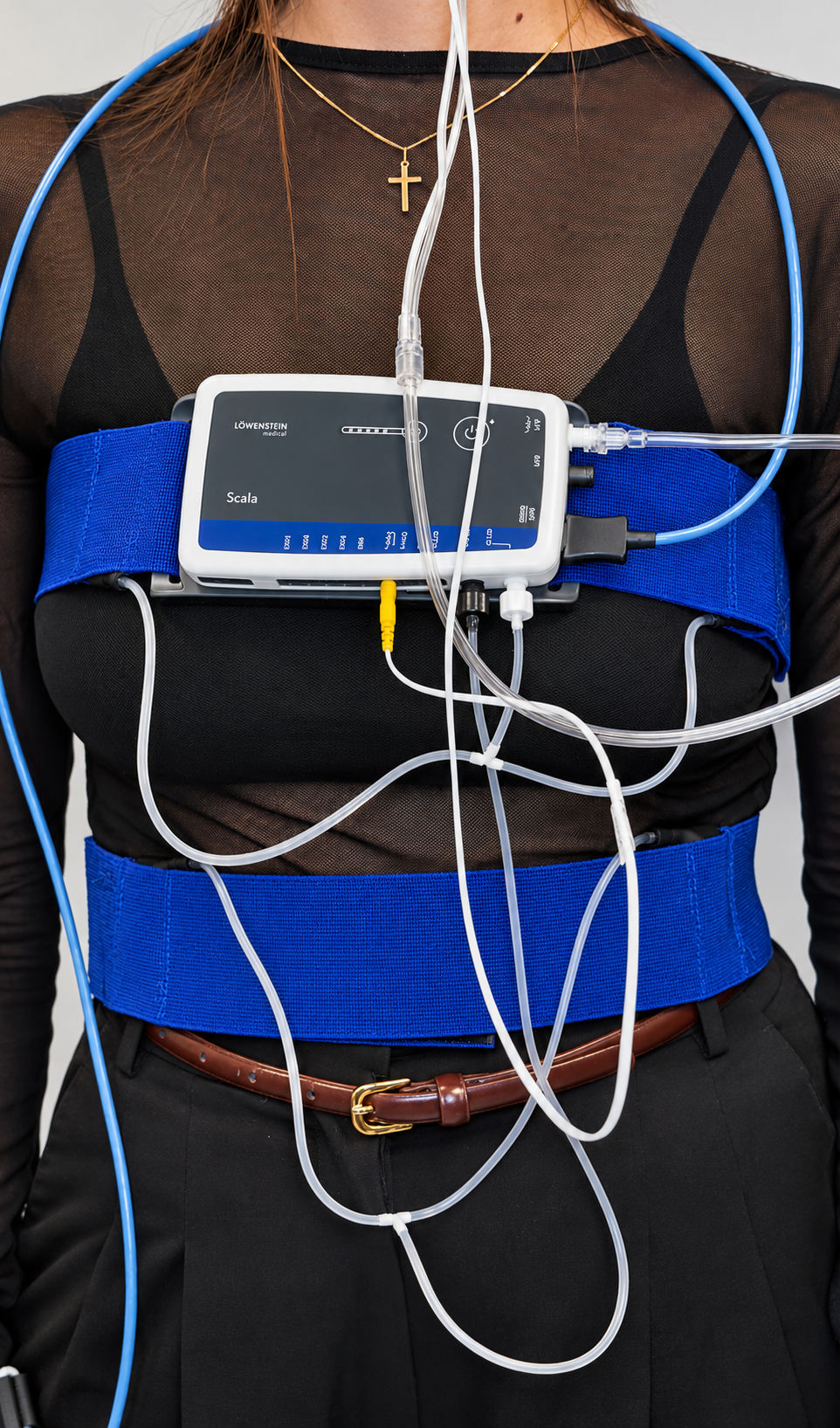
During the visit, the specialist individually adjusts and prepares the sleep polygraphy device according to the patient's parameters. The patient is shown how to use the device and attach it correctly so that the examination can be carried out comfortably at home.
-
03
Sleep examination at home
Before going to bed, the patient simply puts on the pre-prepared device and attaches the sensors. The device automatically starts and stops recording, registering breathing, pulse, blood oxygen saturation and other necessary parameters during the night.
-
04
Evaluation of results
After the examination, the doctor analyses the data obtained, assesses any breathing disorders and provides recommendations for further diagnostics or treatment.
 Personalised approach
Supervised sleep polygraphy plan
Every sleep polygraphy diagnostic is planned and supervised by our specialist and tailored specifically to your goals and body.
Sleep polygraphy
Frequently asked questions about sleep polygraphy
Is sleep polygraphy painful?
No, the examination is non-invasive and painless. The sensors attached to the body may cause slight discomfort, but they usually do not significantly interfere with sleep.
How long does the examination take?
Sleep polygraphy is performed over one night, recording breathing and other necessary parameters during sleep.
Are sleep polygraphy and polysomnography the same thing?
No. Polygraphy is mainly intended for assessing breathing disorders during sleep. Polysomnography, on the other hand, is a more comprehensive sleep study performed in an inpatient setting, which additionally records the brain's electrical activity and other parameters in order to also assess sleep stages. The most suitable examination is determined by the doctor.
Can sleep polygraphy help determine the cause of persistent fatigue?
If your fatigue is related to breathing disorders during sleep, polygraphy can help detect them. However, fatigue can have various causes, and if necessary, your doctor may recommend additional examinations.
How is the examination performed?
During the visit, a general care nurse individually adjusts and prepares the sleep polygraphy device according to the patient's parameters and provides detailed information on how to use it and how to attach the sensors correctly, so that the patient can carry out the examination independently at home.
After the examination, the data obtained are analysed and interpreted by Dr. Madara Mičule and a polysomnography specialist, who assess possible breathing disorders during sleep and provide recommendations for further diagnostics or treatment.
Team
Specialists who perform this service




Sleep polygraphy prices
Full price listDoctor and Specialist Consultations
Sleep specialist
Related services
Complete your result
Further services for a better result.

