

 Diagnostics
FotoFinder
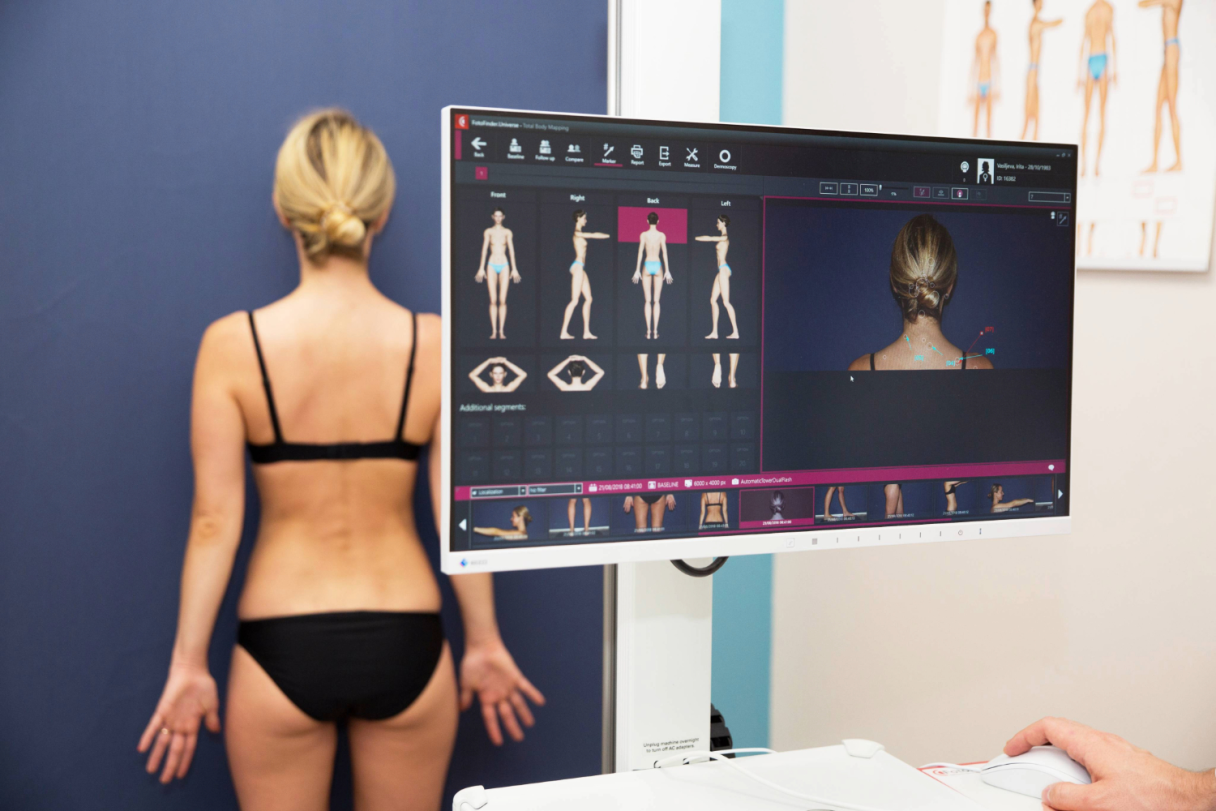
FotoFinder combines standardised total body photography with digital video dermoscopy to document both the location and the microscopic structure of skin lesions in a single system. At the first visit, an individual “skin passport” is created; at follow-up examinations, the software compares the images and highlights new or changed lesions. Unlike a one-off visual examination, this method creates a comparable baseline map for long-term monitoring. Software and artificial intelligence analysis help the doctor navigate the data, but the final medical assessment is always made by a dermatologist.
Price from €14
Book your appointment- Diagnostics
- Full-body “skin passport”
- Monitoring
- Comparison of new and changed skin lesions over time
- Comfort
- Non-invasive and painless imaging diagnostics
A four-step process
How does FotoFinder diagnostics work?
-
01
Risk assessment
The dermatologist discusses your personal and family history, UV exposure and any changes you have noticed, then examines your skin and determines the scope of the examination.
-
02
Standardised skin mapping
Comparable total body images are taken, documenting the skin of the face, body, hands and feet and creating an individual “skin passport”.
-
03
Video dermoscopy and analysis
The doctor examines selected lesions under magnification, saves dermoscopic images and uses software analysis as additional support.
-
04
Conclusions and monitoring plan
The doctor explains the findings, sets the date of the next check-up and, if a lesion is suspicious, recommends further diagnostics or removal with histological examination.
 Personalised approach
Supervised FotoFinder plan
Every FotoFinder course is designed and supervised by our specialist and tailored specifically to your goals and body.
Book this service
We will contact you within 2 working days.
Frequently asked questions about FotoFinder diagnostics
How many FotoFinder examinations are needed?
The first visit creates a baseline “skin passport”. The frequency of follow-up examinations is determined by the dermatologist based on your risk profile and findings: in practice, individual uncertain lesions are often rechecked after 3–6 months, while the interval for repeat total body imaging may be longer. If a lesion appears suspicious from the outset, the doctor may recommend removing it for histological examination rather than simply monitoring it.
Is the FotoFinder examination painful?
No. FotoFinder uses photography and dermoscopic imaging, so the examination is non-invasive and painless. No recovery period is required afterwards. Automatic mapping has technical limitations - lesions under hair or clothing, very light-coloured lesions and areas on the palms or soles may be harder to capture, which is why the system is always complemented by a doctor’s examination.
When are FotoFinder results available?
The dermatologist provides an initial assessment during the appointment by reviewing the total body and dermoscopic images. The full advantage of FotoFinder becomes apparent at the follow-up examination, when the new images are compared with the baseline map, making it possible to objectively highlight new or changed areas. If a finding raises suspicion, the final diagnosis is not determined by the software's risk assessment – the doctor decides on further examination and histology.
How much does FotoFinder diagnostics cost?
The service page lists a price of €20 for digital dermoscopy of a single lesion, €14 for each additional lesion and €80 for total body mapping of multiple lesions.
Team
Specialists who perform this service


FotoFinder prices
Full price listDiagnostics and tests
FotoFinder
Related services
Complete your result
Further services for a better result.


